A cloud adoption journey is akin to embarking on a challenging expedition into a harsh environment. The excitement of potential business achievements is tempered by the fear of potential risks. Similar to any ambitious expedition, thorough planning, training, and preparation, coupled with disciplined execution and perseverance in the face of obstacles, can be the deciding factor between success and failure, even life and death.
The Empty Quarter
On February 4th, 2013, our co-founder Dave Joyce, along with Alex Harris and Marco Broccardo, embarked on a 1,000km journey to set a world record as the first men to cross the Rub’ Al Khali, also known as the Empty Quarter, “unsupported” on foot. The idea for this expedition had originated eight years earlier during a conversation between Alex Harris and Sir Ranulph Fiennes while waiting out a blizzard on Mt. Everest.
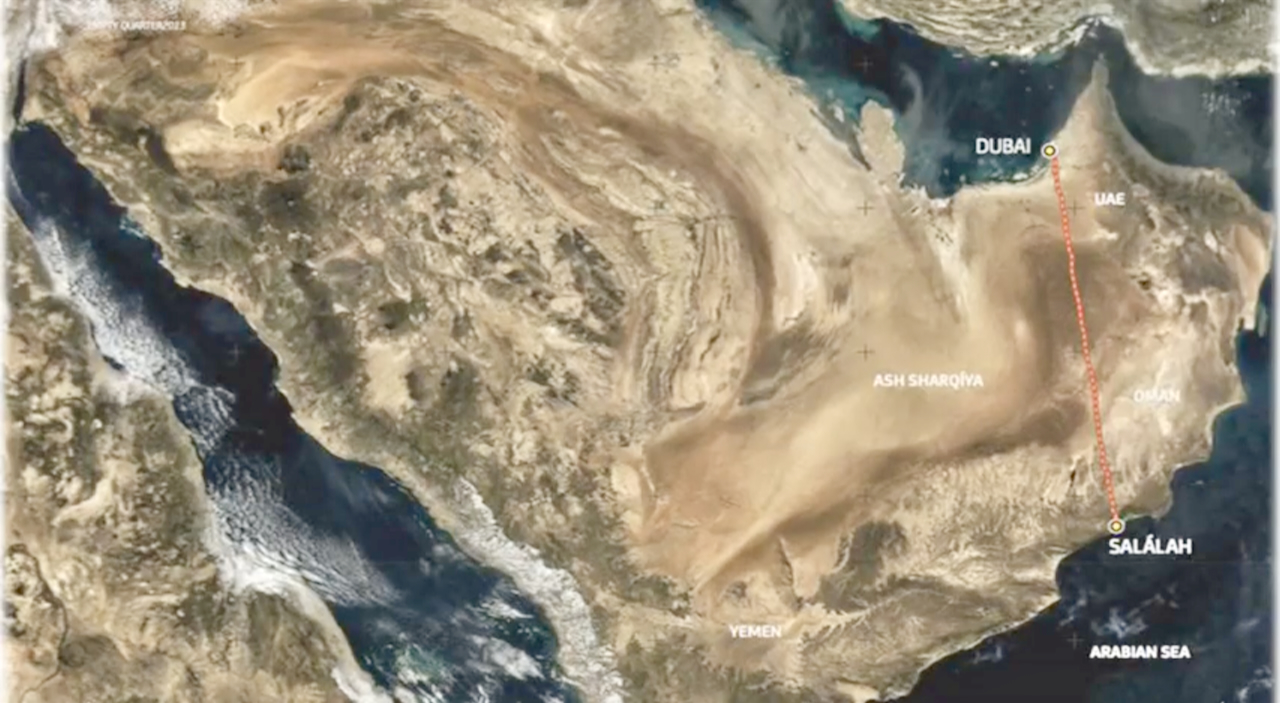
As depicted in Figure 1, the proposed route across the Empty Quarter was arduous, taking the team through a vast, uninhabited expanse of scorching desert located between Oman and the UAE, spanning approximately a third of the Arabian Peninsula. Temperatures regularly soared above 45 degrees Celsius during the day, and sand dunes rose as high as 300 meters. One particularly treacherous area, known as Umm Al Samim, or “the mother of all poisons,” was comprised of 150km of salt encrusted fields that had reportedly claimed entire herds of camels due to its quicksand.
Like the Empty Quarter, the cloud can be an equally awe-inspiring yet hostile and inhospitable place for business owners and executives. It offers the alluring promise of improved agility, performance, and security, but it also poses career-threatening risks for the inexperienced, such as runaway costs, data leakage, loss of control, and security breaches.
The expedition crew
As the leader of the expedition, Alex Harris carefully selected a small crew with the right combination of experience, motivation, and resilience for the crossing. He knew that the team would need to navigate harsh desert conditions while pulling a heavy cart of supplies for at least 40 days.
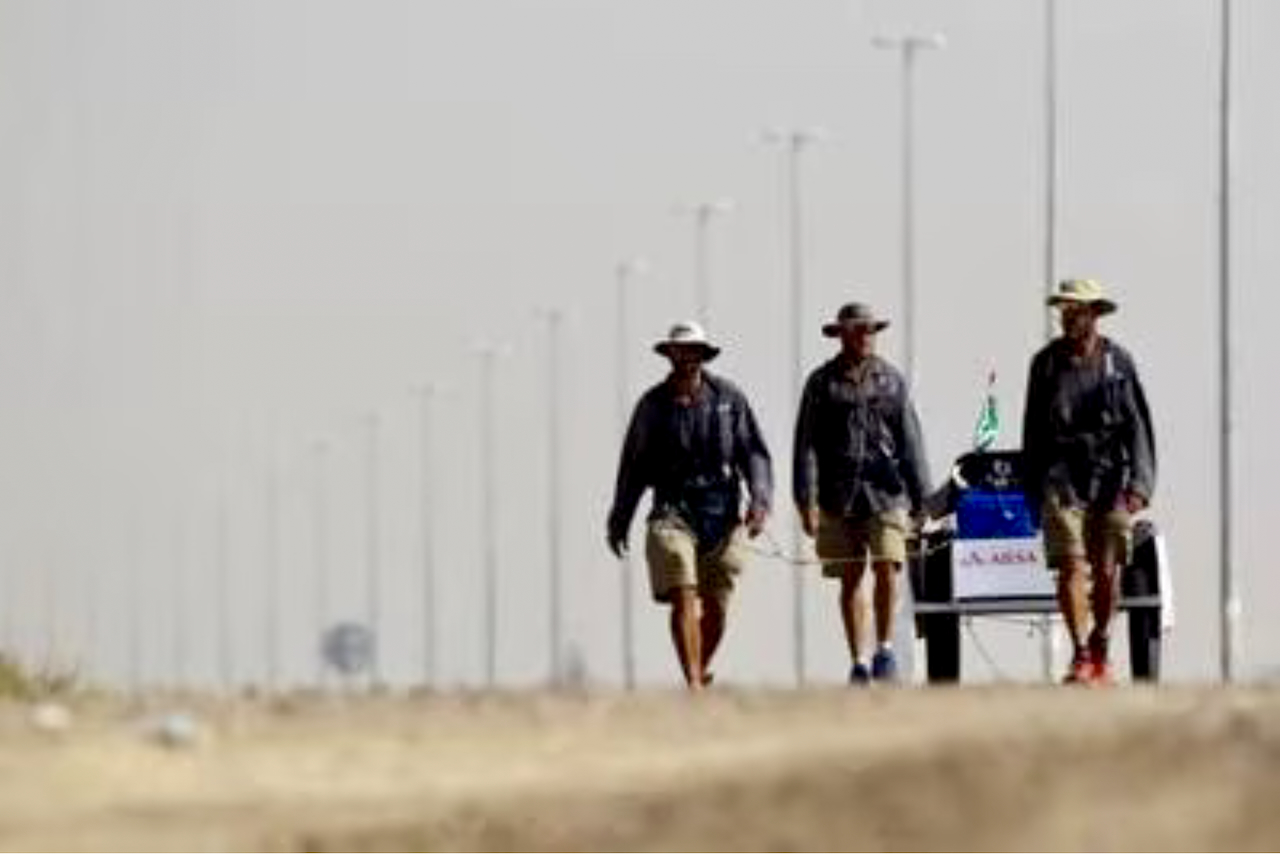
Alex chose Dave, an experienced adventure racer known for pushing his limits and Marco, an emerging adventurer and mountaineer who had successfully climbed three of the Seven Summits. Despite their lack of desert experience, all three men were disciplined, motivated, and highly experienced in hostile environments.
Similarly, when embarking on a cloud adoption journey, it is crucial to assemble a team that is fit, skilled, and experienced in the ever-changing cloud domain. The ability to remain focused, motivated, and disciplined despite setbacks and intense pressure is crucial for the success of any cloud adoption project.
Planning and preparation
Researching the domain
Preparing for their expedition, the team meticulously researched everything they needed to know to survive in the harsh desert environment. They studied the accounts of previous explorers, consulted with local experts, and sought out the advice of residents along their proposed route. Over the course of several years, they amassed a wealth of knowledge about the terrain, weather conditions, and resources that would be available to them during their journey.
Their research revealed that there were no reliable sources of food to be found along the way, but they did identify three active wells where they could refill their water tanks. It also brought to light the dangers of Umm al Samim, a treacherous quicksand area on the eastern edge of Rub’ Al Khali, and the importance of navigating around, rather than over, the towering sand dunes.
Similarly, planning for a cloud adoption journey requires thorough research and understanding of the cloud industry. Talking to experts who have “local knowledge” of the cloud domain can help narrow down the vast array of options and provide insight into the resources available, as well as the potential hazards to avoid. Learning from those who have already adopted the cloud in similar contexts can provide valuable insights and help ensure a successful journey.
Defining and refining the requirements
At the core of their preparation was the challenge of how to minimize the total weight of supplies while still carrying everything needed to survive in the desert for the entire journey. Through testing and training in desert-like conditions, they determined that they could sustain 8 hours of walking per day with 3,000 calories of food and 4-5 litres of water per person. Their training, including endurance events in Oman and the surrounding area, confirmed that they could maintain an average of 25km per day, making the expedition roughly 40 days in total.
However, the weight of all the necessary food, shelter, communication, and contingency supplies, as well as a third of their water, added up to a minimum of 130kg per person, significantly more than each could carry on their backs. They needed something that could carry roughly 400kg and be pulled across the sand without getting stuck.
Similarly, in the context of cloud adoption, the challenge becomes how to maximize the performance and flexibility gains from migrating assets into the cloud while minimizing security risks, all within the available budget.
To tackle this challenge, early training sessions with the different types of assets (servers, databases, services, applications, etc.) in “cloud-like conditions” are critical in the preparation stages. These sessions not only build the team’s proficiency but also allow for the measurement of the time and effort required for the successful migration, testing, and deployment of each asset type. From there, a reliable estimate of the time and cost for the full adoption journey can be developed.
What is needed is a fast, cost-effective, transparent, and risk-managed means of extracting, transforming, testing, and then deploying various assets into a secure cloud environment.
Iterating towards a solution
The expedition team faced a challenge in how to transport the necessary supplies for their journey through the desert without overburdening themselves. They solved this problem by designing a cart that could be pulled by two team members, allowing the third to navigate ahead. The first prototype was too heavy but over the course of three years, they iteratively refined the design, making it lighter and more reliable through testing and training in desert-like conditions.
Similarly, in a cloud adoption journey, effective navigation requires knowledge of the exact location of the team within the artefact migration plan, the complexity of the cloud environments they’re working, and the available options (e.g. re-host, re-platform, refactor) for future artefact deployments. Real-time reporting on progress, status, and complexity ensures that the team’s course can be corrected if necessary and that adequate support can be provided in an emergency.
The crossing
Daily discipline
The team’s main priority when they set out on their journey was to adhere to a strict discipline. They had agreed on their daily food and water rations, as well as a schedule for setting off and stopping for the day, with scheduled breaks for rest and lunch. Duties such as camp setup, cooking, and technology/communications were rotated among the team members.
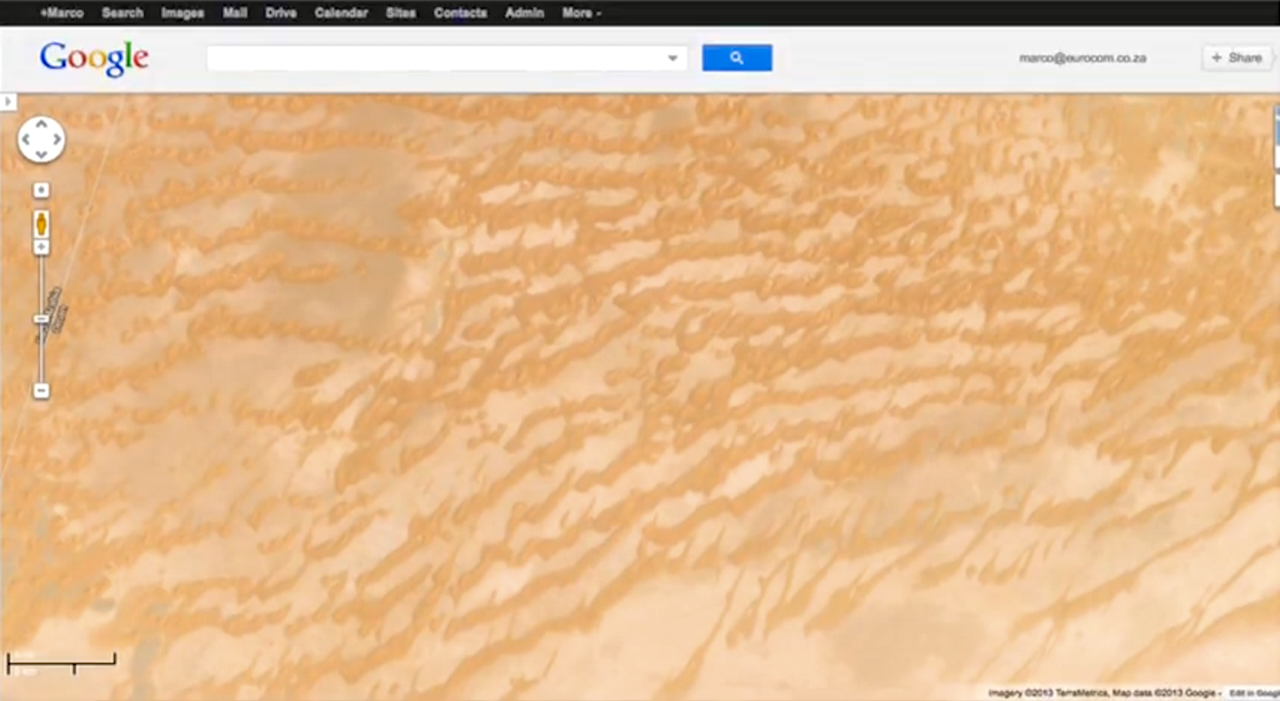
Two team members would pull the cart, while the third member would scout ahead using printed satellite images to navigate the best path through the dunes. To prevent injury, they rotated every hour, establishing a 3-hour cycle of pulling the cart for 2 hours and navigating for one. This created a nested set of rhythms – a 3-day role rotation cycle at camp, a daily 9-hour walk cycle with scheduled breaks, and an hourly cart rotation.
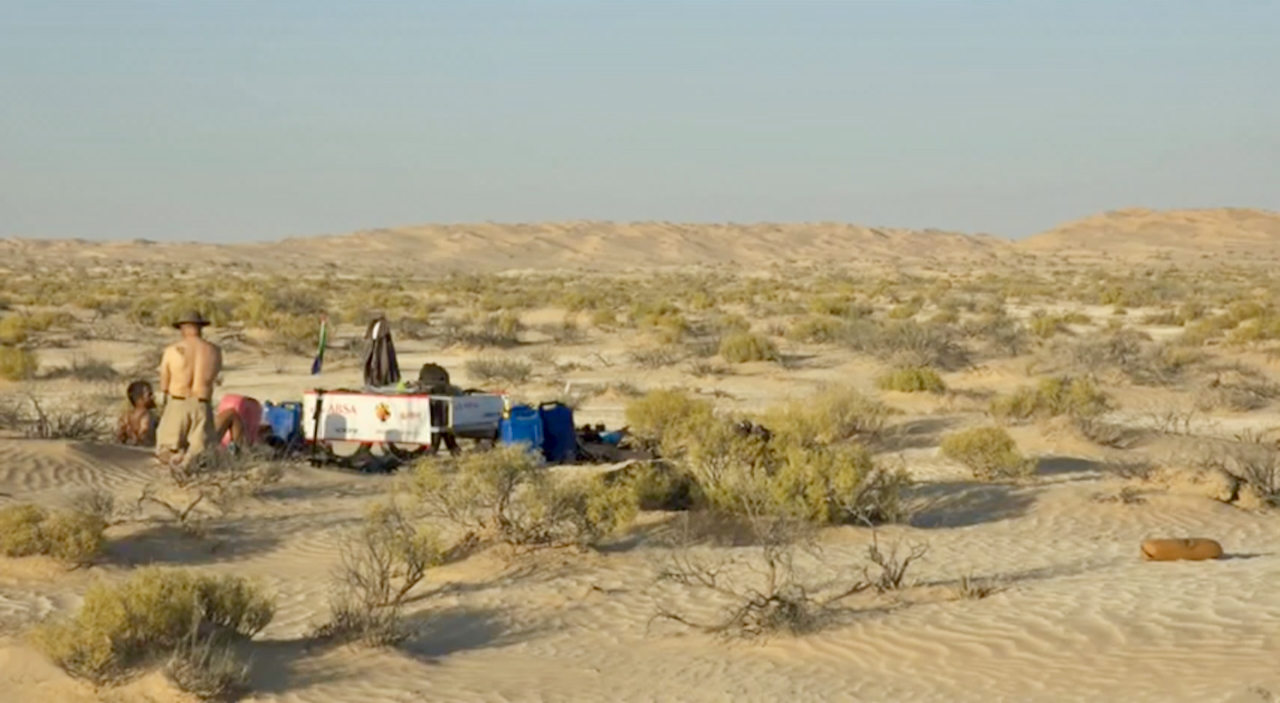
For the next few days, the team focused on maintaining these rhythms and allowed the terrain to determine the distance they covered each day. Their primary goal was to be consistent with their energy expenditure, navigation, and consumption of food and water. On flat terrain, they were able to cover more than 30km in a day, but progress could drop to less than 20km on hilly or soft-sand terrain.
In the context of cloud adoption, a sprint is analogous to the 3-day cycle in the desert. Within each sprint, there are multiple fixed daily work cycles of sustained effort, separated by regular breaks to check-in and recharge. The goal of the team is to maintain the planned average deployment rate for artefacts, while allowing for changes in the complexity of the artefacts and cloud environment to influence daily progress.
Real-time navigation
Because the dunes were as high as 300m, the team couldn’t afford to expend energy climbing them to stay on their planned route. Therefore, the primary role of the designated scout for the day was to navigate by sight, using both the Google Earth satellite image and visible terrain to select the easiest route between the dunes, even if it deviated from the planned or shortest route.
Similarly, in the context of cloud adoption, navigation follows a “navigate by sight” approach. While the overall project plan outlines the intended sequence of artefact migrations, its primary function is to describe what needs to be achieved. The final decisions on how best to deploy the artefact are made in the context of the artefact’s specific conditions, which are visible to the team in real-time.
Dealing with setbacks
In the early stages of the journey, the team encountered a few unforeseen setbacks. On the first day, they lost their only first aid kit and, after some discussion, decided to continue without it and take extra precautions. Similarly, on the fifth day, one of the team’s mattresses was lost, but they chose to endure the discomfort of sharing the remaining ones rather than backtracking to retrieve it. However, on the tenth day, the loss of the solar mat used to charge their navigation and communication devices proved to be a more significant setback. They sent one team member back to retrieve it and made adjustments to prevent any further equipment losses.
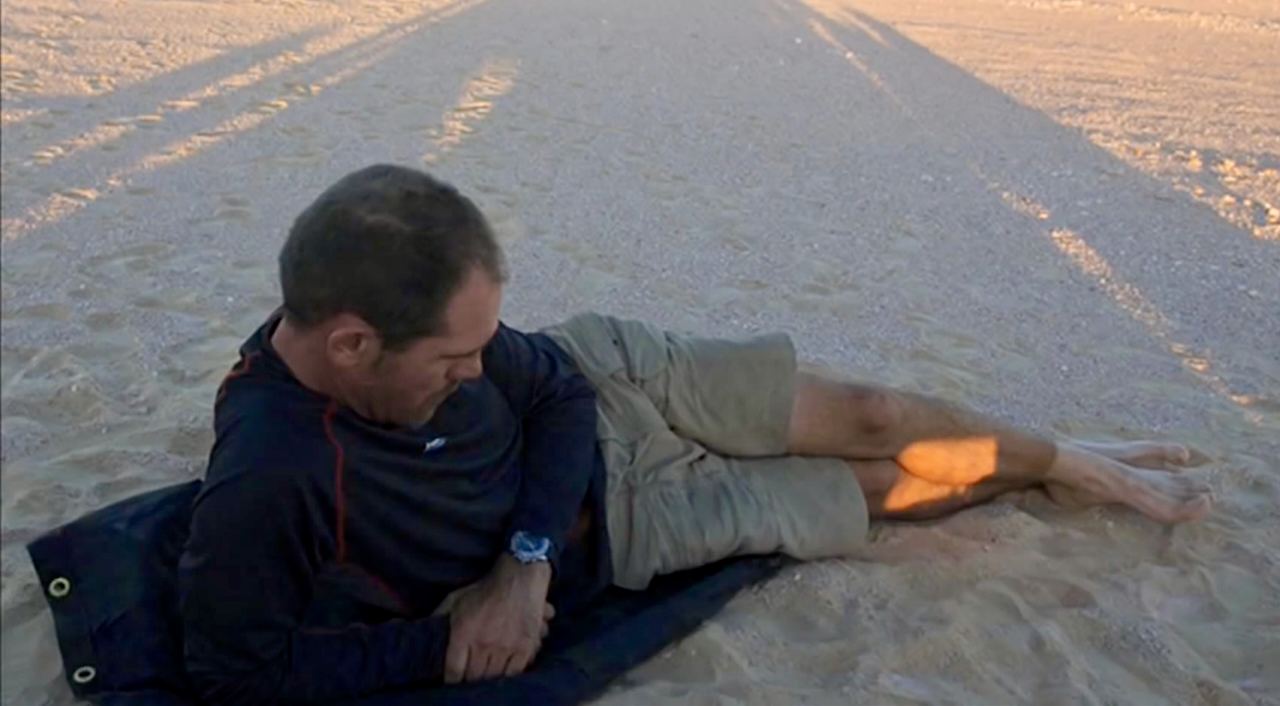
Similarly, during a cloud adoption journey, unforeseen setbacks such as latency issues, data loss, and security breaches may occur. The team may choose to make compensatory adjustments for minor setbacks, but more severe issues may require rolling back to a previous state to resolve before proceeding.
Dealing with extreme conditions
As they approached day 13 of their journey, they entered an area just north of the oasis in Mughshin where they had just refilled their water tanks. The sand was suddenly soft as snow, making it difficult to traverse and taxing the team’s physical and mental fortitude. The temperature rose to a scorching 49 degrees Celsius, adding to the threat of heat exhaustion. Despite their best efforts, they were only able to cover 11km that day.
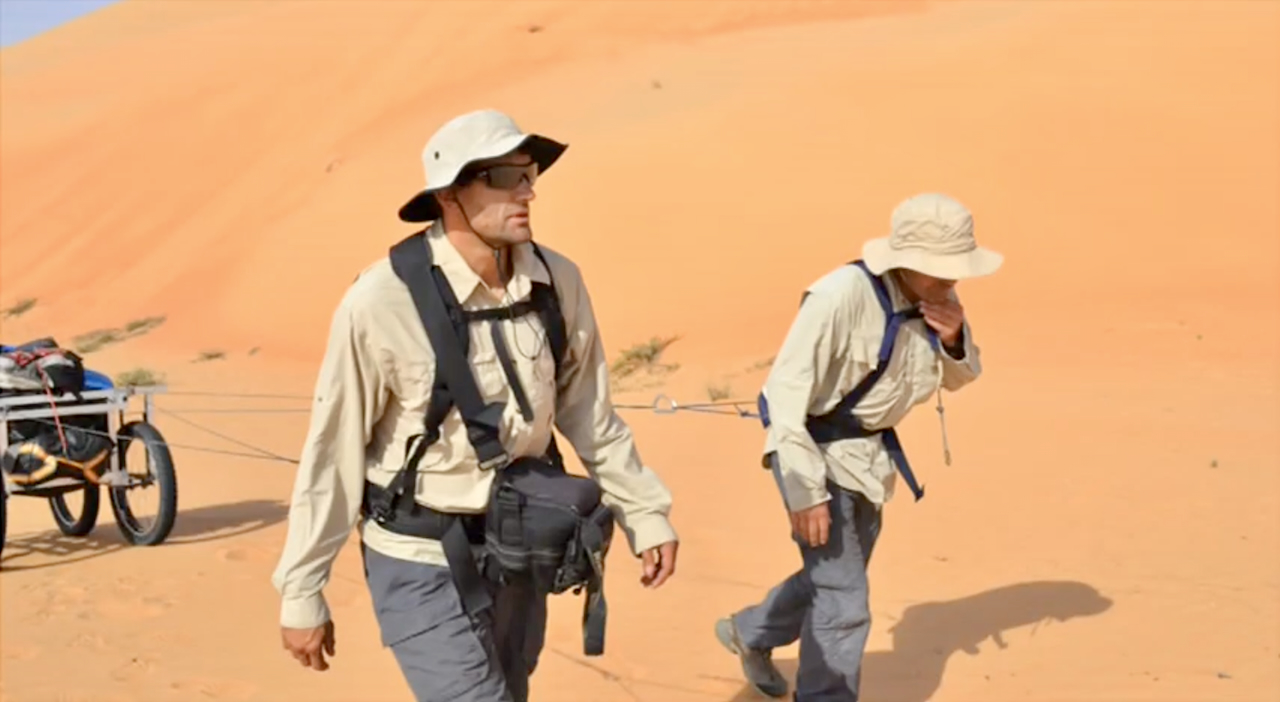
In the following two and a half days, the team pushed on, knowing that they would run out of supplies if they didn’t maintain an average of 25km a day. As the days passed, they grew increasingly exhausted, thirsty, and despondent. One evening in near delirium they created the Great Wurgle, a fictitious Bedouin spirit known for driving even the toughest men to despair, and nicknamed the area “Wurglewood”. Instead of directing their frustration at one another, they channelled it towards the Great Wurgle, imagining themselves as conquerors defeating the spirit in order to maintain their morale.
Similarly, in any cloud adoption journey, there will be times when pressure from stakeholders and the complexity of migrating and deploying new artefacts create an inhospitable work environment. Without a clear and unifying purpose, such as defeating a metaphorical “Great Wurgle,” the team may become demoralized and direct their frustrations at each other, ultimately putting the project and their own reputations at risk.
Dealing with temptation
During their desert crossing, the team faced ethical dilemmas related to interpreting the concept of “unsupported.” One of these challenges was navigating the paved roads around Salalah and Dubai. After some discussion, they ultimately decided to pull their cart on the sand beside the road to avoid any ambiguity. As they ventured further into the remote regions of the desert, they encountered villagers who offered them food and water. Despite the temptation, they made the difficult decision to decline these gifts in order to uphold their goal of completing the expedition without support.
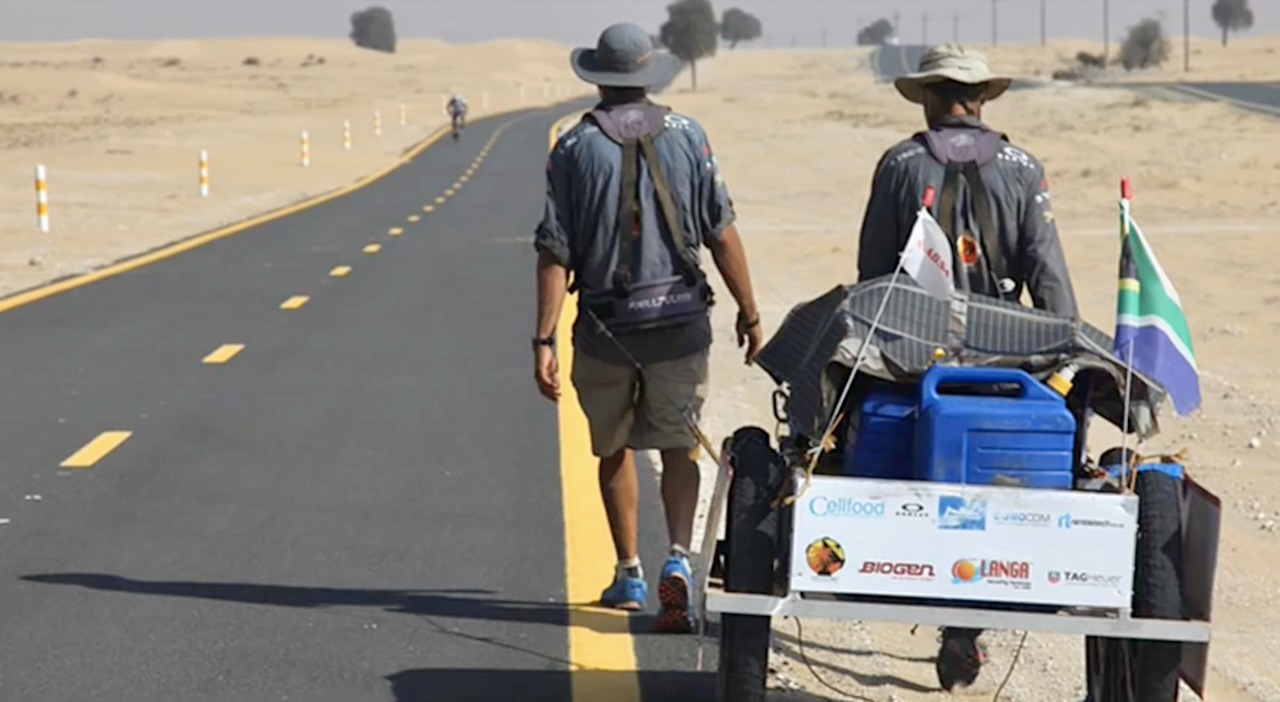
Similarly, during a cloud adoption journey, the temptation to take shortcuts or use unauthorized tools may arise. To overcome these challenges, it’s essential to have a team that is fully invested in the project’s goals and standards, as well as a safe space where ethical dilemmas can be openly discussed and debated.
Getting to the finish
As the team overcame the difficulties they faced in Wurglewood and implemented measures to prevent further setbacks, they were able to maintain their daily routines and make steady progress despite the scorching heat. While certain days presented more challenging conditions, causing their progress to slow, on average, they managed to stay ahead of their planned itinerary.
On March 16th, 2013, after 40 days of journey, the crew reached the coast of Dubai. They had covered a total distance of 1,208km, averaging 30km per day. Each member had lost a significant amount of weight, with Alex losing 10kg, Dave 12kg and Marco 15kg. As they dipped their feet in the water, the team wept with joy and accomplishment.
.jpeg)
Despite the grueling nature of the journey, Marco later reflected that “It was one of the most amazing experiences of my life, but during the expedition, I hated every minute of it. It was hard, it was backbreaking, it was tiring. There wasn’t a day when I wasn’t counting how many days until it was over.”
In a similar vein, the journey of cloud adoption can be challenging and demanding, but ultimately, it is the team’s relentless commitment to daily disciplines and the willingness to push through setbacks that will lead to success. Like the expedition, there will be days when progress slows, but by staying aware of the team’s progress and being willing to go the extra mile, they will ultimately achieve their goal and experience the satisfaction and recognition of having conquered the “Great Wurgle.”